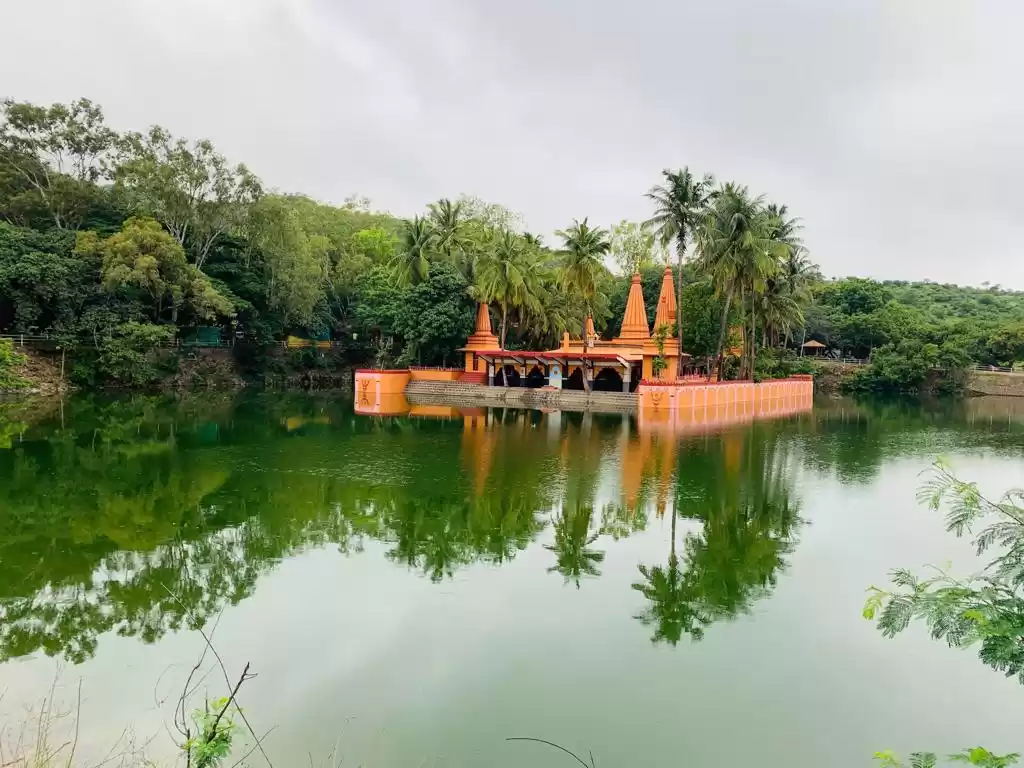
Located near Junnar in Pune district, Yedgaon Dam is more than a mighty wall of earth and concrete—it is a symbol of hope, struggle, and transformation for countless families who depended on the land but were at the mercy of the rains. As one of the most significant components of the Kukadi irrigation project, the dam marks a turning point in Maharashtra’s rural journey toward prosperity.
Its story becomes even more meaningful because it carries the imprint of Maharashtra’s first Hon. Chief Minister, Yashwantrao Chavan—a visionary leader who dreamed of a state empowered by irrigation, progress, and self-reliance. When the dam was inaugurated in 1977, it wasn’t just a ribbon-cutting ceremony; it was the beginning of a new chapter for the villages around Junnar.
Today, Yedgaon Dam is not only a lifeline for agriculture but a living reminder of political courage, engineering innovation, and the unbreakable resilience of the people who built and believed in it. It stands tall as a promise fulfilled—and as a foundation for the prosperity the region enjoys today.
Why the Yedgaon Dam Was Needed
Before the dam was conceptualized, the Junnar–Shirur belt struggled with:
- Irregular rainfall
- Depleted groundwater
- Crop failures
- Poor rural incomes
- Migration of local youth for work
Farmers depended entirely on monsoon rains. Sugarcane, vegetables, bajra, and wheat demanded reliable irrigation, which simply did not exist.
To uplift rural agriculture, the government launched the Kukadi Project, under which dams like Yedgaon, Manikdoh, Dimbhe, Wadaj, and Pimpalgaon Joge were planned.
Also, the Yedgaon Dam, an important link in the integrated Kukadi irrigation system, plays a vital role in storing and regulating water received from upstream dams such as Dimbhe, Manikdoh, Wadaj, and Pimpalgaon Joge. From Yedgaon, the main canal extends into a large command area that covers multiple districts—not just Junnar, but also Pune, Ahmednagar, and parts of Solapur.
Together, the five dams of the Kukadi Project support irrigation across nearly 1.56 lakh hectares, forming one of Maharashtra’s most impactful multi-dam irrigation networks. Through this interconnected system, Yedgaon contributes significantly to stabilizing agriculture and strengthening rural livelihoods, especially in drought-prone regions that once relied solely on uncertain monsoon rains.
Yashwantrao Chavan, known for his commitment to rural development, saw the Yedgaon Dam as a critical solution for long-term water security.
Construction Timeline & Local Opposition
Initial Planning
When surveys and land acquisition began (in the early to mid-1970s), villagers expressed strong fears. Many were anxious about losing fertile land along the river, their homes, and their family heritage.
Reasons Behind Local Opposition
- Fear of Displacement – Villagers worried about losing ancestral property.
- Compensation Concerns – Many believed the compensation was inadequate.
- Lack of Clear Rehabilitation Policies – In those days, formal rehabilitation frameworks were not fully established.
- Emotional Attachment – Temples, old houses, and community spaces carried deep cultural value.
- Misinformation & Suspicion – Some believed the dam would only benefit big farmers elsewhere.
After several meetings and discussions, villagers reluctantly agreed to let the project move forward—but the opposition did not fully end.
Opposition at the Start of Dam Construction
According to local elders, the day of the bhoomipuja—the official beginning of the dam’s construction—turned into a dramatic and deeply emotional moment for the village.
When Yashwantrao Chavan arrived for the ceremony, many villagers gathered to voice their pain and frustration. Their memories of lost homes and farmlands were still raw, and they were not ready to bless a project that had cost them so much.
In a striking act of resistance, some villagers overturned the ceremonial puja thali, scattering the offerings on the ground.
In rural tradition, overturning a puja thali is a powerful expression of anger and rejection—a way of declaring that the community does not accept the decision being made.
Chavan’s Calm and Wise Reaction
Witnessing the intensity of the villagers’ protest during the bhoomipuja, Yashwantrao Chavan neither argued nor insisted on continuing the ritual.
He simply stepped back and quietly left the site, acknowledging the community’s pain and respecting their emotions.
But what mattered most was this:
He did NOT stop the project.
Chavan remained firmly rooted in his long-term vision:
- Prosperity begins with water
- Irrigation would transform the region
- Future generations would benefit, even if the present resisted change
His leadership ensured that emotional unrest would not derail a water project that would eventually uplift thousands of families.
Historical Significance of Chavan’s Role
Although the bhoomipuja ceremony faced strong opposition, Yashwantrao Chavan’s involvement in initiating the dam’s construction in mid-1970 became a defining moment. His commitment did not waver; the work progressed steadily under his guidance.
Chavan consistently emphasized:
- Modern agriculture cannot thrive without reliable water
- Irrigation is the backbone of rural Maharashtra
- Regions like Junnar, often hit by drought, must be empowered through sustainable water projects
In the years that followed, his vision came to life, bringing growth, stability, and prosperity to the very community that had once opposed the project.
Technical Specifications of Yedgaon Dam
- Type: Earthfill & Gravity Dam
- River: Kukadi River
- Height: 29.74 m
- Length: 4,511 m
- Purpose: Irrigation & Water Storage
- Opening Year: 1977
Because of the last-phase works (e.g., spillway gate installations) extending into 1977, the reservoir reportedly became fully functional by 1978.
Impact on Regional Agriculture and Development
1. Irrigation Revolution
After the dam’s commissioning, thousands of hectares began receiving water, supporting crops like:
- Sugarcane
- Wheat
- Vegetables
- Fodder crops
- Fruits
2. Rural Economic Growth
Improved irrigation led to:
- Higher farm productivity
- Better farmer incomes
- Growth in dairy and allied activities
- Less migration
3. Water Security
The dam ensures water supply even during low-rainfall years, stabilizing agriculture and drinking water sources.
Yashwantrao Chavan’s Vision Behind the Yedgaon Dam
Chavan’s philosophy was simple yet powerful:
“Where water flows, prosperity follows.”
His vision for the region was:
- Make farmers independent through irrigation
- Reduce drought impact
- Build long-term water infrastructure
- Strengthen Maharashtra’s agricultural backbone
Yedgaon Dam perfectly reflects this thinking.
Yedgaon Dam Today
Today, the dam continues to serve the region reliably.
- It supports huge irrigation command areas
- Ensures drinking water for nearby villages
- Helps regulate seasonal floods
- Increases groundwater levels
Although Yedgaon Dam has a smaller storage capacity than the larger upstream reservoirs like Dimbhe and Manikdoh, it remains one of the most important components of the Kukadi Irrigation Project. The water stored here is released directly into the Kukadi Left Bank Canal (KLBC), which begins at Yedgaon and irrigates nearly 90,000 hectares of farmland across Pune, Ahmednagar, and parts of Solapur districts.
Functioning as a crucial balancing reservoir, Yedgaon also receives regulated inflows from the upstream dams—Dimbhe, Wadaj, Manikdoh, and Pimpalgaon Joge. This makes Yedgaon the central junction through which water is efficiently managed and distributed to the vast downstream command area, ensuring reliable irrigation even in years of weak monsoon.
While most of the water is directed through the canal network for agriculture, any surplus during heavy rains naturally flows downstream along the Kukadi River.
Yedgaon Today Is Far More Prosperous
The region that once struggled with drought-like conditions is now:
- Agriculturally stronger
- Economically more stable
- Socially more confident
- Better connected
- Better equipped with water and infrastructure
Yedgaon Dam transformed not just the landscape but the lifestyle, economy, and identity of the entire region.
Yedgaon Dam as a Tourist Spot
The serene reservoir and surrounding hills make the area a peaceful getaway.
Tourists enjoy scenic views, especially during the monsoon and winter.
Nearby attractions include:
- Shivneri Fort
- Lenyadri Caves
- Manikdoh Dam
- Junnar Wildlife Region
Best time to visit: June to February
Conclusion
Yedgaon Dam is more than an irrigation structure—it is a symbol of transformation and the strong will of Yashwantrao Chavan.
Despite protests, emotional opposition, and dramatic incidents during the inauguration, the project continued because of Chavan’s long-term vision.
Today, the same dam that once faced resistance stands as a powerful reminder that progress sometimes demands courage, foresight, and patience.
Yedgaon Dam truly remains a landmark in Maharashtra’s water development history.